Infrared sauna
Infrared sauna in Batam: warmth on your existing supply
Carbon-panel room for one or two at 45-60 degrees, drawing only 2,200-5,500 VA and finished inside a single day.
This cabin holds 45-60 degrees and heats the body directly instead of the air around it, which is exactly why it runs on just 1.7-2.4 kW off an ordinary household supply. It suits Nagoya apartments, rented houses in Tiban, and anyone whose building simply won't allow a PLN upgrade. Indicative IDR 30-70 million, installed in one to two days.
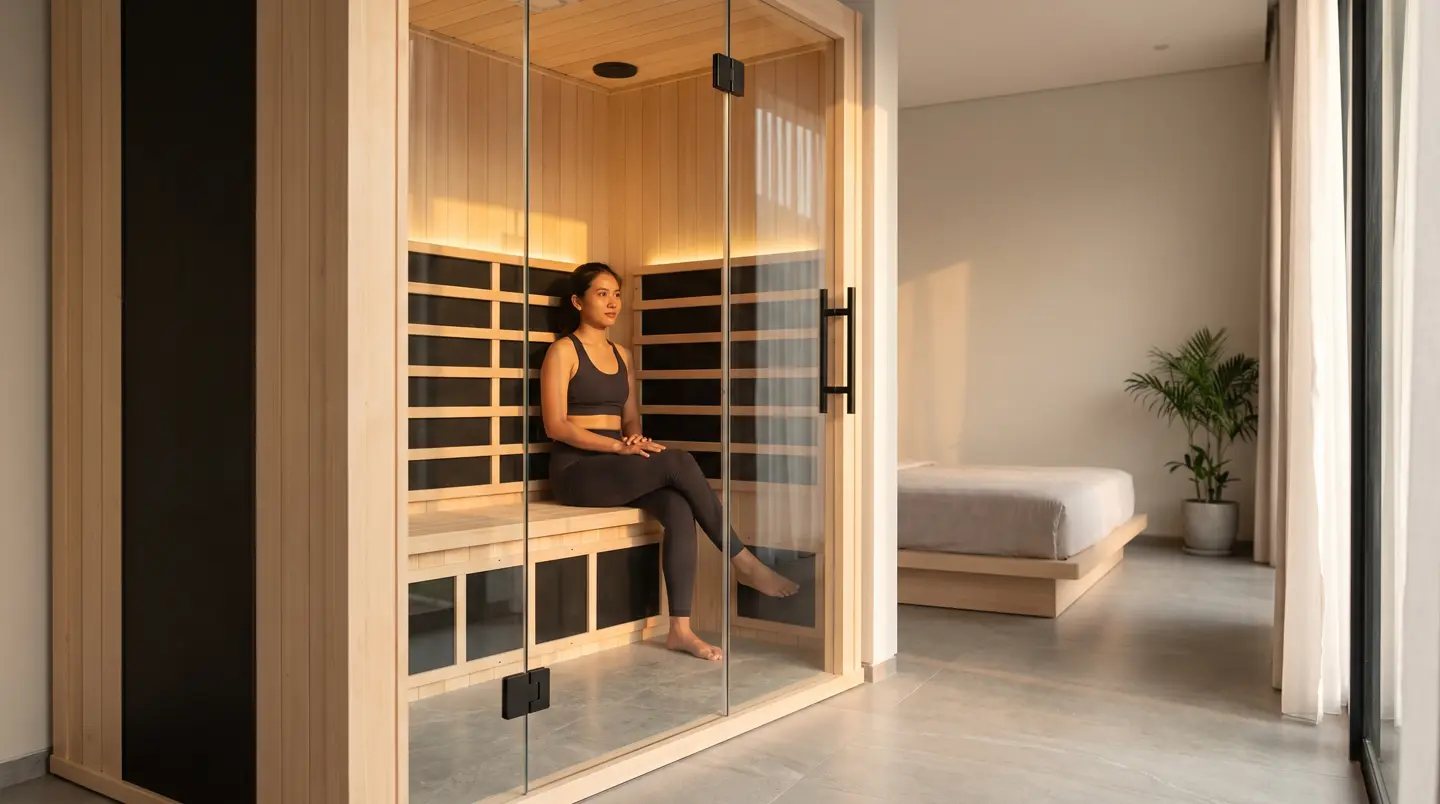
Direct heat versus a heated room - what actually changes
A dry cabin heats the air to 70-90 degrees and lets the air do the work on you. An infrared room stays at 45-60 degrees and sends the energy straight into your body through carbon panels, so you still sweat properly at a temperature that feels manageable on an island where the air outside is already sitting at 32. People who find a full hot room overwhelming, older users especially, tend to prefer this version.
The trade-off is straightforward: there's no water thrown on stones, no blast of steam, and the whole social ritual reads differently. If that ritual is actually what you're after, the dry cabin is the right choice and the extra electrical work behind it earns its cost.
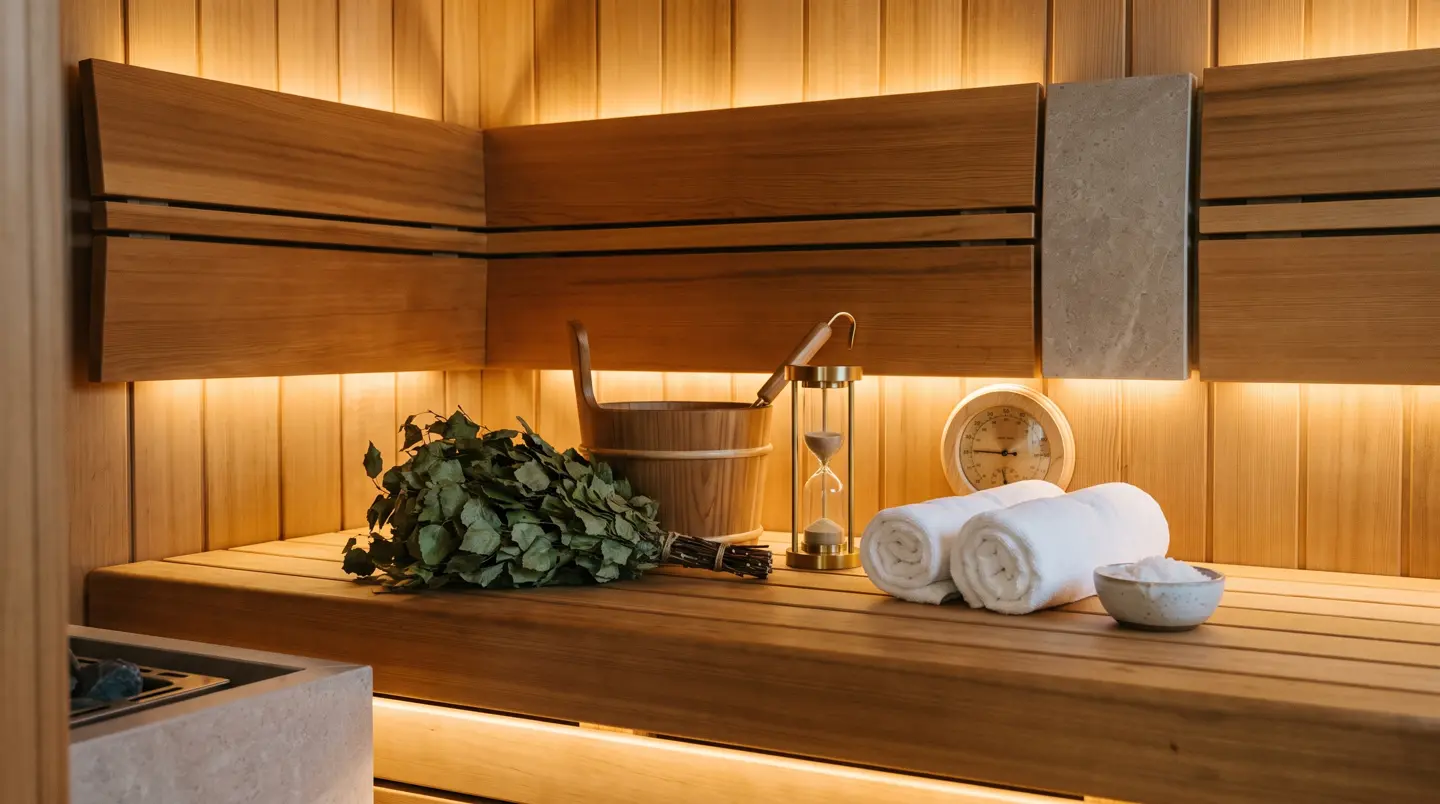
Who this cabin is actually built for
Renters make up most of it. Apartment residents in Nagoya and Jodoh who have no say over the building's supply. Households in older Tiban and Sekupang houses sitting on 2,200 VA where a PLN Batam upgrade would mean rewiring the whole property, not just adding a circuit. Expatriate managers on a two-year posting who want something they can hand to the next tenant or simply take with them when the posting ends.
The other group is short of space rather than short of power. A 1x1 m single cabin tucks into a bedroom corner or a landing in a Batam Centre cluster house where nothing bigger would ever fit, and the whole job goes from unpacking the panels to a first session in under a day.
Why 1.7-2.4 kW matters more than it sounds
The panels draw 1.7-2.4 kW, comfortably inside a 2,200-5,500 VA connection even with the air conditioning left running. That one number is really the whole reason this product exists: no application to PLN Batam, no upgrade fee, no waiting on a meter change that a landlord might refuse anyway.
That doesn't mean cutting corners on the electrics. A dedicated circuit with its own breaker and an ELCB, heat-resistant cable to the panel terminals, and a proper check of the existing consumer unit, since plenty of older island houses have circuits never meant to run anything for a sustained stretch. Running cost stays modest at an indicative IDR 100,000-250,000 a month for one or two sessions a day.
One to two days, wherever on the island you are
Cabins leave Batam Kota as finished panels, not raw material. In Sekupang, Batu Aji or Nongsa the crew usually carries them in, assembles, wires and commissions the whole thing inside a day - two if the circuit has to be extended from a consumer unit further away. Nothing gets chased into a wall and nothing is glued to the floor.
Pairing it with a cold plunge is common practice, giving you hot-cold contrast without ever touching the meter, at an indicative IDR 75-160 million for the pair. Figures for every combination sit on the pricing page.
Indicative pricing
| Configuration | Indicative price (IDR) |
|---|---|
| Infrared box for one or two, fully installed | IDR 30-70 million |
| Infrared box paired with a two-seat prefab sauna | IDR 45-105 million |
| Infrared box paired with a timber plunge and chiller | IDR 75-160 million |
| Retrofit of an old cabin to infrared panels | IDR 15-50 million |
| Accessory bundle: bench pads, light, thermometer | IDR 1.5-8 million |
Treat these as ballpark IDR numbers - the confirmed price comes out of the free on-site survey.
Frequently asked questions
Does the carbon panel technology match what's used in Singapore wellness studios?
Yes - carbon and ceramic infrared panels are a commodity component sourced from the same regional suppliers regardless of which side of the strait the studio sits on. Where installations actually differ is the controller and the wiring behind the panel, which is the part we take responsibility for and a studio-grade unit sometimes skips.
We're only in the Nagoya apartment three weekends a month - does the cabin need anything done between visits?
Nothing beyond leaving the door very slightly open so air moves through the sealed cabin. Unlike a wet room, there is no standing moisture to manage, so an infrared cabin left alone between visits is close to maintenance-free - power it down at the wall if you like, and it starts exactly the same on your next weekend.
Can a serviced apartment operator install one for guest use, or is this strictly residential?
Operators do install them, most often as a single cabin in a shared wellness room rather than one per unit. The same 1.7-2.4 kW draw that makes it viable in a private apartment makes it easy to run continuously in a shared space, though we size the controller for higher turnover and note it on the same warranty terms as a residential job.
Service areas
Other products
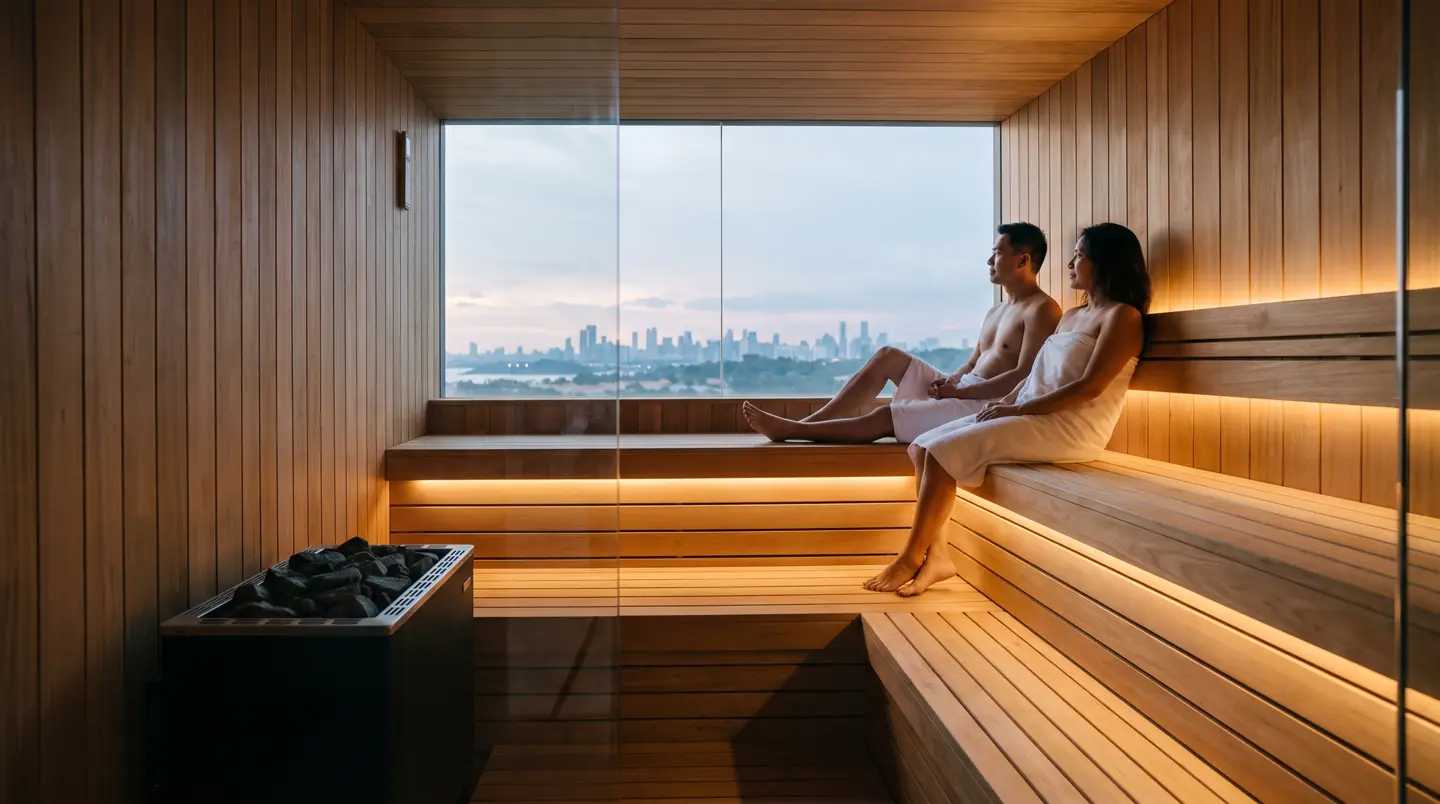
Dry sauna
Timber-lined room running 70-90 degrees off a 3.6-9 kW heater, sized to fit the space you have instead of a fixed factory template.
IDR 60-120 million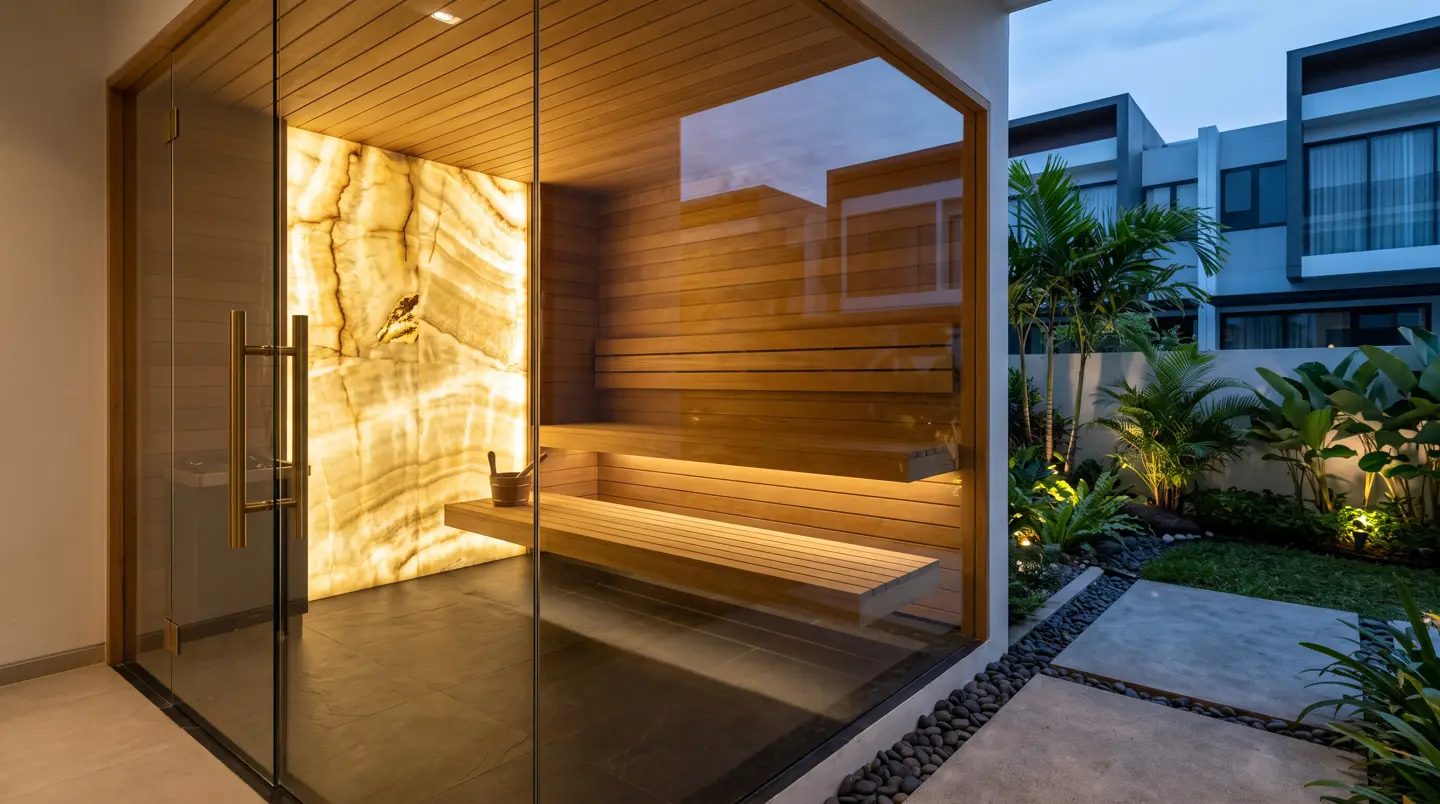
Villa luxury sauna
Thermowood-and-glass cabin built for a pool deck, framed so the outlook stays open while the sea air stays outside.
IDR 80-150 million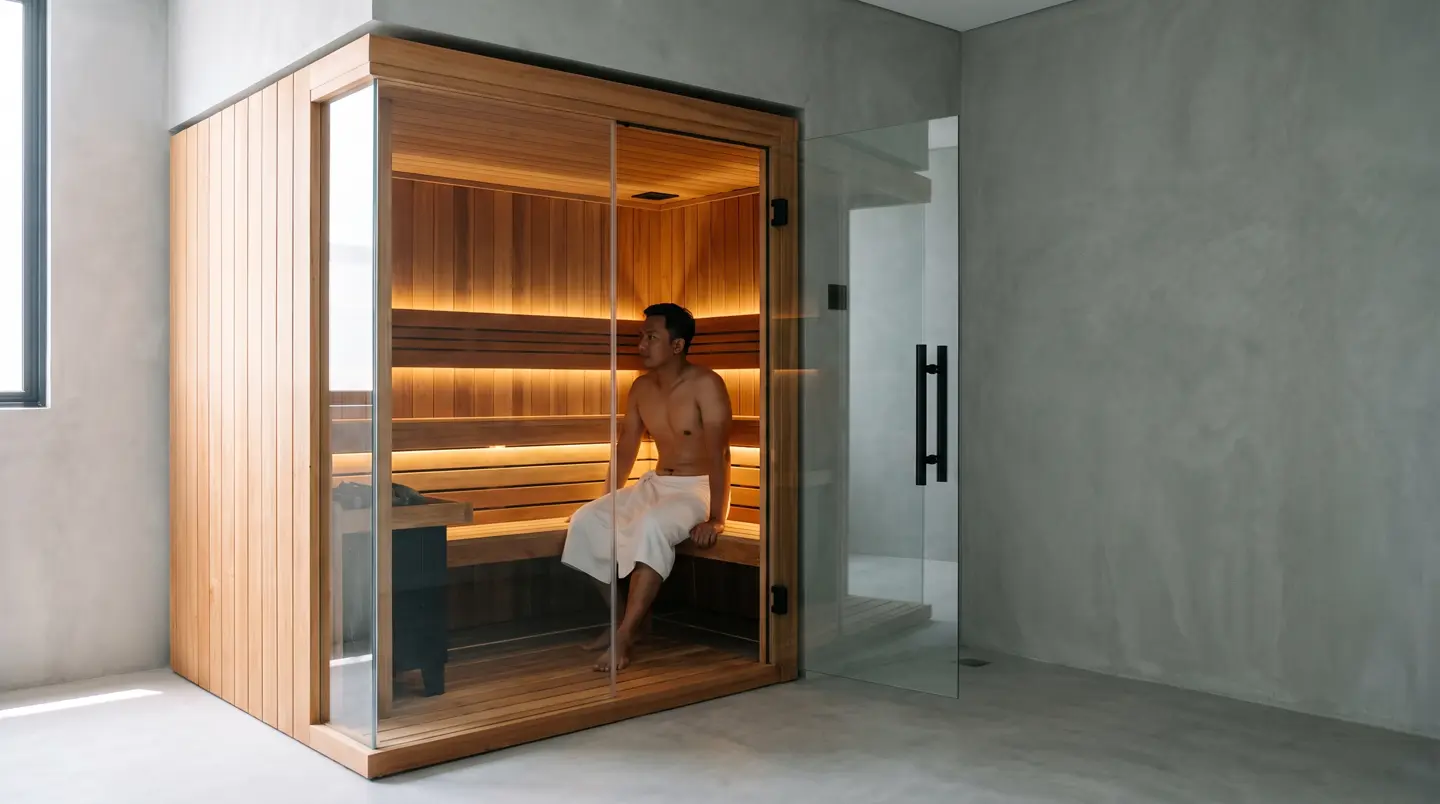
Prefab sauna cabin
Ready-built two-person unit from the workshop - carried in, wired and heating within the day, and just as easy to relocate later.
IDR 15-35 millionGet a range
Tell us what you're picturing and we'll size it up
Name the district or estate and roughly what you'd like built. Expect a same-day callback in English, plus a free survey booked off the back of it.
Snap three photos and we will text back a ballpark figure
Doesn't matter if it is a Nongsa villa, a Nagoya health club or a bare room in a Sukajadi cluster house - three photos plus your VA rating gets you a first number.